

Grocery shopping for seniors becomes easier when the plan covers the entire task, not just the trip to the store. A useful arrangement includes choosing food, managing a list and budget, getting purchases home, putting them away, and making sure they can actually be used. Depending on the person’s abilities, that may involve independent shopping, family help, delivery, or a caregiver’s assistance.
The first question is where the difficulty begins. Is walking through a supermarket tiring? Are heavy bags the obstacle? Is ordering online manageable, but unpacking a delivery difficult? Those situations call for different kinds of support. Replacing an enjoyable shopping trip with delivery is not always necessary, and delivering bags to the doorstep does not always solve the problem.
For families in Parma Heights and Westlake, Ohio, shopping and errand assistance can be discussed as part of a non-medical home care request. Best Quality Home Care Agency can review the needed tasks and confirm what is available for the client’s address and schedule.
Choose Between Shopping Together, Delivery, and Caregiver Help
| Arrangement | When it may fit | What still needs a plan |
|---|---|---|
| Independent shopping with preparation | The person can manage the store and transport but wants a simpler routine | A realistic list, comfortable pace, and manageable bag sizes |
| Shopping with a relative or caregiver | The person enjoys choosing food but needs assistance during the outing | Transport, mobility needs, time in the store, payment, and carrying groceries |
| Someone shops from an agreed list | Going to the store is unnecessary or too difficult | Budget, approved substitutions, receipts, and putting purchases away |
| Grocery delivery | The household can order, receive, unpack, and store the groceries | Service area, fees, replacements, delivery access, and cold storage |
| Delivery plus help at home | Ordering is workable but unpacking or preparing food is not | Coordinating the delivery window and the available caregiver visit |
These options can be combined. A senior might enjoy a short trip for produce while ordering heavier staples for delivery. Another family may use a caregiver for the regular shop and delivery when a relative is away. The aim is a routine that works on an ordinary week, not one that depends on someone rescuing the groceries every time.
Build the List Around Meals the Person Will Eat
Start with a quick check of the refrigerator, freezer, and pantry. Note what is available, what needs to be used first, and what has repeatedly gone uneaten. Buying another large bag of produce will not help if washing, cutting, or cooking it is the real obstacle.
Plan a small number of familiar meals and useful ingredients rather than a complicated menu. An ingredient can serve more than one purpose, but a large batch is worthwhile only when the person can use or appropriately store it. Include straightforward breakfasts, lunches, and snacks as well as evening meals.
Write quantities and package sizes on the list. “Milk” leaves room for a purchase the client cannot lift or finish; a specified size avoids that uncertainty. Note important brands only when preference, allergy information, or another requirement makes them relevant. Group items by store area to reduce unnecessary walking.
A shared list can be handwritten or digital. Choose a method the household will actually maintain. App features are not useful if only one relative knows how to open the list. Keep one current version so two people do not buy the same items or work from different instructions.
Make an In-Store Trip More Manageable
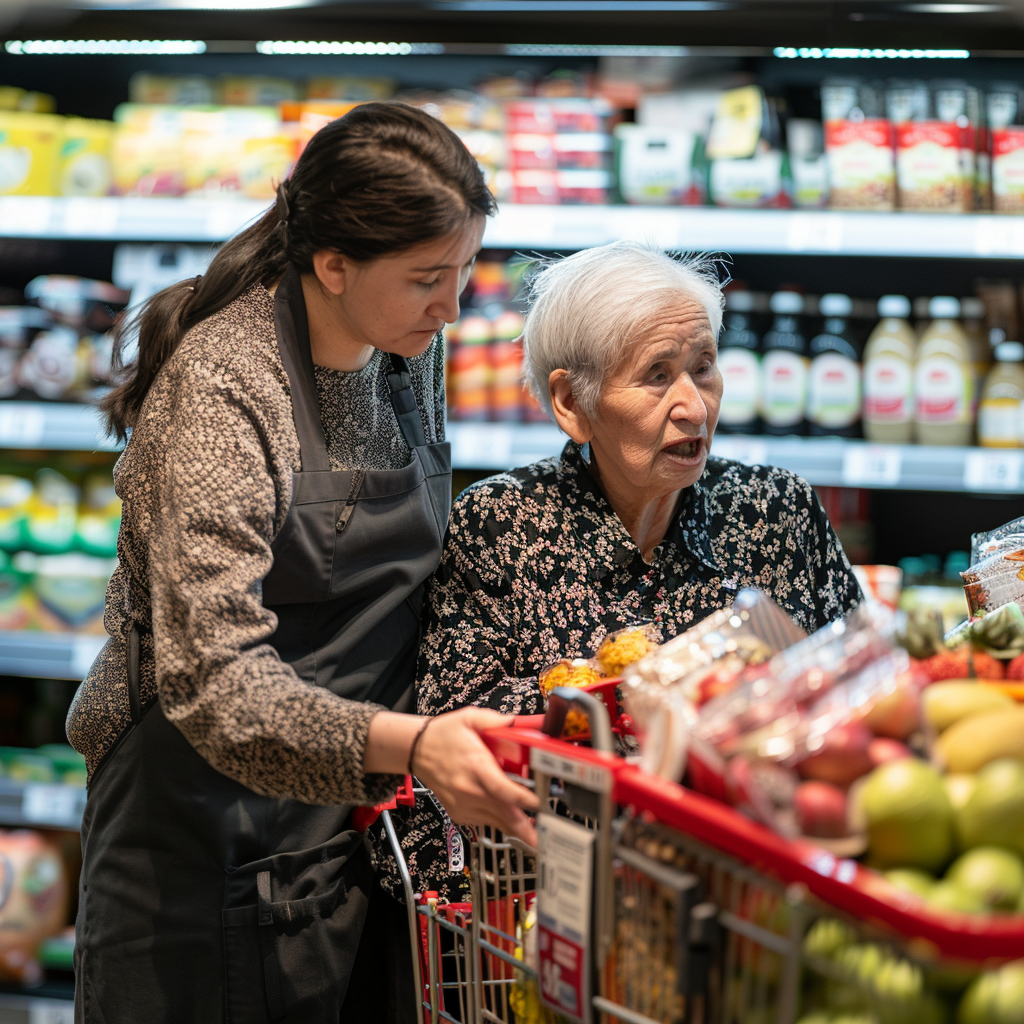
Choose a familiar store and a time that suits the shopper’s energy and routine. A shorter, focused visit may be more comfortable than covering several stores for small discounts. Check the availability of any needed mobility equipment or assistance rather than assuming every branch offers the same facilities.
Keep frequently purchased items together on the list, leave time for breaks, and avoid buying loads that cannot be carried comfortably. Store staff may be able to help locate an item or reach a shelf, but personal assistance throughout a visit should be arranged separately when needed.
When shopping with a caregiver, agree who selects items and how the person wants to participate. Assistance should not become a hurried trip in which someone else makes every decision. The client may want to compare fruit or choose a favorite food while the helper handles heavier items and the checkout.
Consider the journey home as part of the outing. Stairs, parking distance, building access, and carrying bags into the kitchen can be harder than the shopping itself. Explain these details when arranging help, especially when mobility limitations or equipment affect the trip.
Compare Prices Without Creating More Work
A budget helps the shopper or caregiver make consistent decisions. Separate essential items from optional extras and agree what to do if prices are higher than expected. A reasonable substitution plan is more useful than repeated calls from every aisle.
Compare unit prices when package sizes differ. A lower price per ounce is helpful only when the household can use the quantity, store it safely, and handle the container. Smaller portions may cost more per unit but avoid waste or the need to divide a heavy package.
Store brands, weekly promotions, and loyalty programs may offer savings, but compare the total basket and the work involved. Traveling between several supermarkets can add cost and fatigue. A convenient store with a manageable route may be the more practical choice.
Senior discounts vary by retailer, location, day, and purchase restrictions. Verify a current offer with the specific store before planning around it. Do not assume an old advertisement, pharmacy promotion, or membership discount applies to the whole grocery order.
Agree how purchases will be paid for and documented. Keep receipts and reconcile the order with the list. Use the agency’s approved process for spending on a client’s behalf rather than casually sharing bank credentials or leaving financial arrangements undefined.
Choose Food That Fits the Person and the Kitchen
Shopping is more useful when it reflects appetite, preferences, preparation abilities, and existing dietary instructions. Convenience foods are not automatically unsuitable, and unfamiliar ingredients are not automatically harmful. Look at the complete product and how it will be used rather than relying on a slogan on the package.
For comparisons, check the serving size first. The FDA’s explanation of percent Daily Value identifies 5% DV or less per serving as low and 20% DV or more as high. These are general label-reading guides, not a personalized diet prescription.
For someone following instructions for diabetes, kidney disease, an allergy, or another medical concern, use the guidance provided by their clinician or registered dietitian. A caregiver can shop from those instructions but should not create new restrictions or assume a product is suitable because it is labeled “healthy.”
Seasonal produce can add variety, but only buy amounts the person will use. Frozen vegetables, smaller packages, pre-cut ingredients, and easy-to-open containers can also be practical. Consider the preparation that remains after purchase and whether someone is available to do it.
Set Up Delivery So It Reaches the Kitchen, Not Just the Door
Grocery delivery can remove the need to travel, but it introduces different tasks. Someone must choose products, authorize payment, respond to substitutions, receive the order, and store perishable food promptly. Confirm the provider’s current delivery area and the actual fees at the client’s address.
Before ordering, review the delivery window, minimum purchase, service charges, tipping arrangements, cancellation rules, and access instructions. A subscription price does not necessarily include every order-related charge. Check the final total rather than relying on an advertised headline.
Set replacement preferences for important items. For example, specify whether the shopper should skip an unavailable product, use an approved alternative, or contact the household. Allergies and medically directed food requirements should never be left to a guess based on similar packaging.
Arrange for someone to receive and unpack the order when the senior cannot do so. Do not schedule a caregiver visit on the assumption that a broad delivery window guarantees arrival at a precise time. Have a workable alternative if the delivery is delayed or the recipient cannot answer the door.
For chilled groceries, follow FDA food-handling guidance: refrigerate perishables within two hours of purchasing, or within one hour when the outside temperature is above 90°F. Use an appliance thermometer to keep the refrigerator at 40°F or below and the freezer at 0°F or below. Receiving food promptly matters even when a delivery service handles the trip.
Putting Groceries Away Is Part of the Service
Unpacking is easy to overlook when discussing errands. Ask whether assistance will include carrying bags inside, putting cold food away, checking the order, and placing everyday items where the client can reach them. These duties should be specified, not assumed.
Keep storage familiar. A beautifully reorganized cupboard is not helpful if the person cannot find breakfast afterward. Make changes with their involvement, place heavier items where they can be handled appropriately, and avoid leaving bags in walking routes.
Use older suitable items before newer ones and label prepared food when necessary. Follow product instructions, including directions that apply after opening. The FoodSafety.gov storage chart gives useful limits for common refrigerated foods. Do not assume every item lasts until the next weekly visit.
A quick review after unpacking can catch missing essentials or an unwanted substitution while a refund or replacement is still straightforward. Keep enough information for the person managing the account to address the issue without making the senior repeat the whole order.
Connect Shopping With Meal Preparation
A stocked refrigerator does not prove that a person has usable meals. Someone may need help opening containers, preparing ingredients, operating appliances, or serving the food. Include these steps when deciding whether shopping assistance alone is enough.
As an illustrative arrangement, a caregiver might shop from an agreed list, put the groceries away, and prepare lunch during a scheduled visit. Another household may need only assistance receiving a delivery. The task combination and available time must be agreed with the agency; these examples are not fixed packages.
When cooking is the main difficulty, compare groceries plus preparation help with prepared meals and home-delivered food options. Delivery may solve the cooking problem but still leave a need for help with serving, eating, or cleanup.
Food Assistance and Local Resources in Ohio
Food costs and shopping assistance are separate expenses. A program that helps pay for groceries does not automatically pay a caregiver or cover delivery charges. Ask the appropriate administrator which support applies to the person’s circumstances.
The USDA’s online SNAP purchasing information explains that eligible food may be purchased with benefits at participating retailers, but delivery fees and other associated charges are not paid with SNAP. Confirm both retailer participation and the method for paying any remaining charges.
Ohio also recognizes grocery shopping assistance within certain Older Americans Act-funded programs. Its grocery shopping assistance rule makes the extent of grocery transfer part of the provider agreement. This is another reason to ask what happens between the store and the home, not simply whether “shopping” is offered.
For local information, the Western Reserve Area Agency on Aging can help families explore available resources. Eligibility, funding, and service availability need confirmation. These community programs are separate from the services a family may arrange directly with Best Quality.
Discuss Grocery Shopping Help in Parma Heights or Westlake
Before contacting the agency, note the shopping address, preferred stores, usual order size, transport needs, and whether the client wants to join the trip. Explain any stairs or access issues and whether unpacking or meal preparation should be included.
Best Quality Home Care Agency can discuss shopping and errand needs alongside its non-medical home care services. Confirm the available arrangement and spending procedures during the consultation rather than assuming an on-demand delivery service is being offered.
Call (440) 373-7192 or request a free consultation to discuss practical help with shopping and daily life at home.
Questions About Grocery Shopping Assistance
What is the simplest way to make grocery shopping easier?
Identify the difficult step, then plan around it. A shorter list and familiar store may be enough for one person; another may need transport, accompaniment, delivery, or help putting food away. The right solution covers what happens after checkout as well as the shopping.
Can a caregiver shop without the senior going along?
Shopping from an agreed list may be an option when included in the care plan. Confirm availability, the budget, approved substitutions, payment procedures, receipts, and whether the caregiver will put the groceries away.
Is delivery better than shopping with a caregiver?
It depends on the person’s needs and preferences. Delivery avoids travel but still requires ordering, receiving, unpacking, and storing food. Shopping together may preserve an enjoyable outing while providing assistance along the way.
Can SNAP benefits pay for grocery delivery fees?
SNAP can pay for eligible food through participating online retailers, but not delivery fees or other associated charges. Arrange another payment method for those costs and verify the retailer’s current requirements.
How can families avoid waste when buying for one person?
Check existing food first, buy realistic quantities, plan familiar meals, and consider the preparation and storage required. A larger package is not a saving if much of it goes unused or the person cannot handle it comfortably.
