

Prepared meals for seniors can reduce the work of cooking, but the best option depends on what help is needed before and after the food arrives. Some people need convenient meals they can heat and enjoy independently. Others need assistance receiving deliveries, opening containers, serving food, remembering mealtimes, or cleaning up afterward.
For an Ohio family, choosing food and arranging care are related decisions, not identical ones. A delivery service can supply meals without providing a caregiver. A non-medical caregiver can help with an agreed meal routine without being a dietitian or a meal delivery company. Understanding that difference makes it easier to build a practical arrangement.
This guide compares delivered meals, community nutrition programs, and help with food at home. Best Quality Home Care Agency provides non-medical support from offices in Parma Heights and Westlake. Its home care services include meal preparation and daily assistance; families should confirm the tasks and schedule available for their household.

First Decide Whether You Need Food, Help, or Both
Start with the difficulty rather than a brand name. Is shopping tiring? Is standing at the stove uncomfortable? Does a parent leave delivered meals unopened? Can they read the heating instructions and carry the hot container to the table? Each answer changes the kind of support worth arranging.
| Main need | Option to consider | What it does not automatically include |
|---|---|---|
| A convenient lunch or dinner without cooking | Commercial prepared meal delivery | Unpacking, heating, serving, or personal assistance |
| Help accessing food and local nutrition support | A community home-delivered meal program | Eligibility for every applicant or the same schedule in every area |
| A meal and an opportunity to socialize outside the home | A congregate meal program | Transportation or assistance throughout the day |
| Familiar food prepared in the person’s kitchen | Caregiver meal preparation | Groceries, clinical dietary planning, or a personal chef service unless separately arranged |
| Meals are available but remain uneaten | A review of practical and possible clinical barriers, with appropriate help | A solution from simply ordering more food |
One household may combine delivery for several meals with help preparing breakfasts and snacks. Another may prefer cooking assistance and a small reserve of suitable frozen meals. There is no need to force every day into one format if a mixed arrangement is easier to maintain.
Understand What “Prepared” Means Before Ordering
Meal services use terms such as fresh, frozen, ready-to-eat, and heat-and-eat. Those labels describe different levels of preparation and storage. Read the instructions for the actual product instead of assuming that every delivered meal is ready to place on the table.
Refrigerated Prepared Meals
Refrigerated meals may be fully cooked and designed for reheating, or they may contain components requiring different handling. Check how long the unopened product can be stored, what changes after opening, and whether freezing is permitted. A stated shelf life depends on the product and the required storage conditions.
This option may suit someone who can remember which meals to use first and has reliable refrigerator space. It is less practical when food frequently gets pushed to the back, labels are unreadable, or the household orders more than can be used before the stated dates.
Frozen Meals
Frozen meals provide flexibility when the eating schedule changes, provided appropriate freezer storage is available. Some products heat from frozen; others have different directions. Check the label and the appliance requirements before ordering a large quantity.
Consider whether the person can reach the freezer, remove the package, follow the steps, and manage the hot container afterward. A meal can be convenient in theory but difficult to use with limited vision, hand strength, or memory. A small initial order can reveal those practical problems.
Meal Kits Are Not the Same as Ready Meals
A kit containing ingredients and a recipe still requires cooking. It may involve chopping, handling raw food, using several pans, and cleaning the kitchen. That can be enjoyable for a person who wants to cook, but it does not remove the task for someone who can no longer manage it.
Confirm whether a service sends complete meals, partially prepared ingredients, or a mixture. Do not choose a kit solely because its marketing promises quick preparation. The work must fit the person who will actually be doing it.
Commercial Meal Delivery: Compare the Current Offer
Private companies differ in product format, menus, minimum orders, subscription terms, shipping, and delivery areas. Some offer particular dietary categories, but a category name does not confirm suitability for an individual’s medical needs. Review the complete product information and seek clinical guidance when necessary.
Examples include Mom’s Meals and Magic Kitchen. Magic Kitchen describes its meals as delivered frozen. These are examples for comparing formats, not a ranking, a promise of coverage, or confirmation of a partnership with Best Quality. Check current delivery and payment arrangements directly.
Older comparisons may still recommend Silver Cuisine. Its official transition page states that Silver Cuisine is no longer operating and directs customers to bistroMD. Do not assume the former ordering terms or promotions remain available through the replacement brand.
When reviewing any commercial service, check the normal ongoing price rather than only a first-order offer. Look at the actual menu you would use, how substitutions work, and whether there are enough suitable choices to avoid repeating food the person dislikes. Confirm the checkout total for the delivery address before making a commitment.
Community Meal Programs in Northeast Ohio
Community nutrition programs are different from a commercial subscription. Their purpose, eligibility, funding, assessment, and delivery arrangements may depend on the local provider and the program involved. Contact the administering organization rather than assuming a national name describes one identical service everywhere.
The Western Reserve Area Agency on Aging’s nutrition programs describe home-delivered meals and congregate meals in communities across its service region, including Cuyahoga County. Its program information identifies services for people age 60 and older and their spouses, with priority for frail, homebound, or isolated older adults.
Home-delivered meals, often called Meals on Wheels, may help a person who is homebound because of illness or disability. Congregate meals take place at community locations and provide an opportunity to eat with others. Ask which option is appropriate, how enrollment works, what the schedule covers, and whether transport is available.
Discuss weekends, holidays, dietary requirements, and any waiting period with the local program. Do not assume that a meal is delivered every day or that enrollment includes personal care. These details determine what the family still needs to arrange.
Community meal programs are not services administered by Best Quality merely because they are mentioned here. They may complement separately arranged home care when the responsibilities and any funding conditions are clear.
When a Caregiver Is Useful Alongside Prepared Food
Delivered food solves only the cooking or supply stage. A person may still need help bringing a box inside, storing meals, choosing one, following directions, and reaching a comfortable place to eat. Those steps should be included when describing the need for home care.
Caregiver assistance can be discussed around specific tasks: preparing a simple meal, reheating suitable food, setting the table, serving, washing dishes, or organizing ingredients. The available work must fit the agreed care plan, relevant instructions, and the time scheduled for the visit.
A caregiver can also provide company at mealtime. That might mean conversation while lunch is prepared or sitting nearby during a meal. It should match the person’s preferences rather than turning eating into a monitored performance. More about the social aspect is available in our companionship guide.
Describe any hands-on eating assistance or swallowing concern before services begin. These needs require an appropriate assessment, and clinical instructions should come from qualified professionals. A general request for “meal help” is not enough information to establish that an arrangement is suitable.
Choose Meals the Person Can Use and Wants to Eat
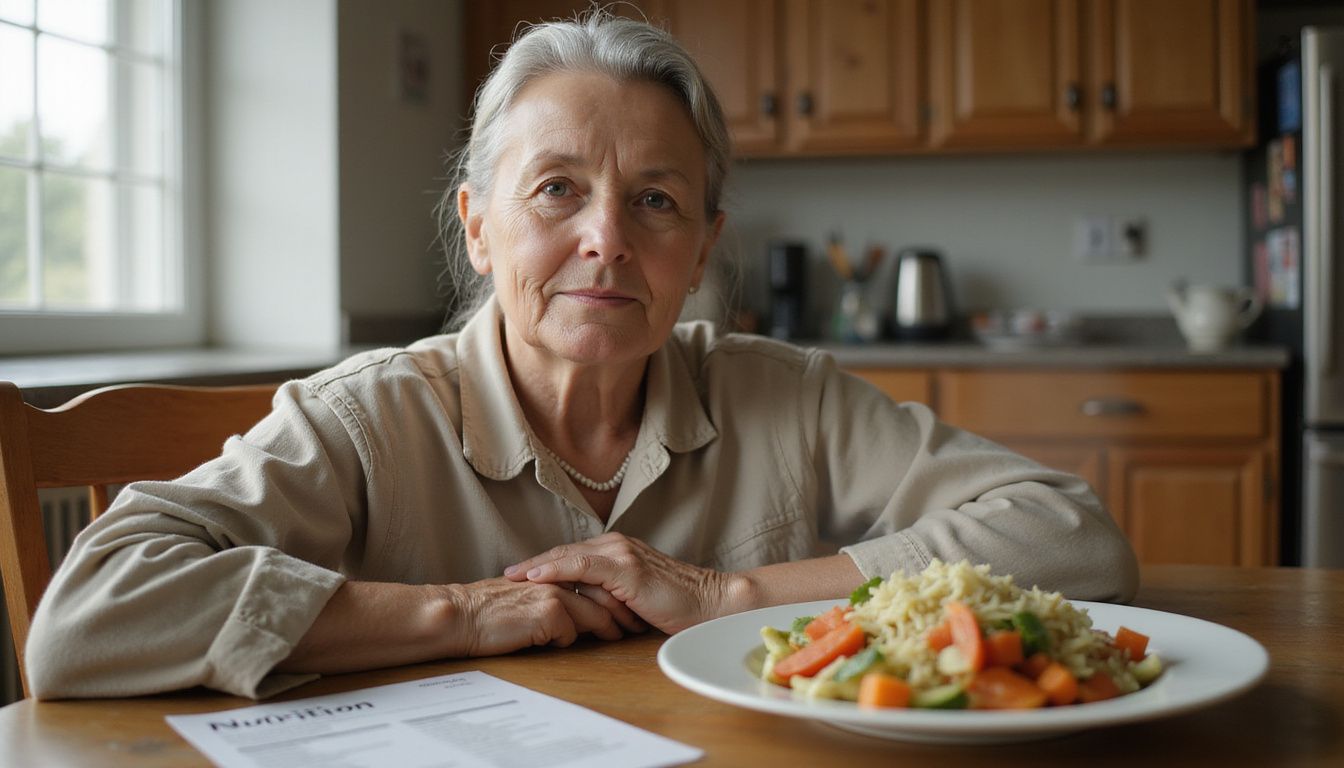
Start with familiar preferences: favorite foods, disliked flavors, usual portion size, meal times, and whether the person prefers a hot or cold lunch. Ask them to help choose the first order where possible. A technically convenient service is not useful if its meals remain untouched.
Look at how the meal is packaged. Can the seal be opened? Are the instructions readable? Does the container fit the microwave? Is it stable enough to lift safely? These small details can decide whether the person can continue handling meals independently.
Check what is included with the main dish. Some orders contain complete meals; others are individual entrees or sides. A family may still need to provide breakfast, beverages, snacks, fruit, or other foods. Compare the whole week’s requirements instead of assuming a dinner subscription covers all eating needs.
Review the menu after the first few meals. Ask which choices were enjoyable, which were difficult to handle, and whether portions suited the person. That feedback is more valuable than accumulating a large stock because a recurring order was never adjusted.
Try a Small Order Before Setting Up a Repeating Plan
A trial should answer practical questions, not just whether the delivery arrived. Choose a manageable selection that reflects the person’s usual tastes and any established dietary requirements. Make sure the order size fits the available storage and the meals likely to be eaten before their relevant dates.
Use the first few meals to observe the complete routine. Was the package easy to identify? Could the person read the directions and open the seal? Did the heating method suit the kitchen? Was the portion comfortable to handle and enjoyable to eat? These are household usability questions, not a clinical assessment.
Keep brief notes about preferences and problems. A meal that is disliked because of a particular sauce may not mean the entire service is unsuitable. Repeated difficulties with packaging or instructions, however, may make the format a poor match unless assistance is available.
Check the next-order deadline before the trial finishes. Some services renew automatically, and a family can receive another full order before deciding whether the first one worked. Confirm how to pause, change quantities, or cancel through the provider’s actual process.
Include the older adult in the decision about continuing. Convenience for the relative placing an order is only one consideration. The person receiving the meals should have a meaningful say in taste, portions, timing, and the amount of variety they want. A service that fits those preferences is easier to incorporate into everyday life.
Nutrition Labels and Special Dietary Requirements
Prepared meals are not automatically designed for every senior. Food preferences, appetite, health conditions, and professional instructions differ. Avoid assuming that smaller portions, lower calories, or a product labeled “senior-friendly” are always the right choice.
Read the nutrition information for the portion that will actually be eaten. A package can contain more than one serving. The FDA’s guide to Nutrition Facts labels explains serving sizes and how to compare products on the same basis.
If a clinician has given specific instructions, keep a current written copy available when selecting meals. Check allergens and ingredients as well as headline claims. A “diabetes-friendly” or “renal” category is not a substitute for confirming that a product fits the individual’s prescribed plan.
Swallowing difficulty, changes in appetite, or unexplained weight changes deserve discussion with the person’s healthcare professional. A registered dietitian can help interpret dietary needs. Non-medical caregivers can follow agreed meal instructions but should not independently diagnose a problem or create therapeutic nutrition targets.
Nutrition tracking apps may be useful for a household already using them with professional guidance. They do not replace dietary assessment, and entering detailed information can add work for someone who simply needs a dependable lunch. Choose technology for a clear purpose, not because a service offers many features.
Food Storage: There Is No Universal Fourteen-Day Rule
Do not assume prepared meals stay safe in the refrigerator for two weeks. Shelf life varies by food, packaging, preparation, whether it has been opened, and how it has been stored. A manufacturer’s date for a particular sealed product cannot be transferred to homemade meals, takeout, or an unrelated community delivery.
The FoodSafety.gov cold storage chart lists three to four days for many cooked leftovers, soups, and stews when refrigerated appropriately. Follow the specific product’s storage and after-opening instructions. Where directions are missing or unclear, ask the supplier rather than inventing a longer period.
Use an appliance thermometer, leave enough usable storage space, and place meals where they can be found. Mark the opening or preparation date when relevant. Put suitable items that need using sooner ahead of newer ones, without changing the kitchen so much that the person cannot find familiar foods.
For food intended to be frozen, follow the product instructions and plan portions before storage becomes crowded. Do not assume every refrigerated meal can be frozen or reheated in its original packaging. The label or supplier should explain the correct process.
Receiving a Chilled or Frozen Delivery
Arrange for someone to receive the order and store perishables promptly. The FoodSafety.gov delivery safety guidance explains the importance of checking delivery conditions, temperature, and storage. Food that requires refrigeration should not be left in an entryway while everyone assumes another person has put it away.
Do not judge a questionable delivery only by smell or appearance. Contact the supplier about damaged packaging or temperature concerns and follow official safety guidance. A vague impression that a package feels cool is not the same as confirming appropriate handling.
Include delivery delays in the plan. If the senior cannot bring food inside, coordinate with an available helper and keep a suitable alternative meal. A delivery window should not be treated as a guaranteed appointment with a caregiver.
Reheating and Handling Food at Home
Follow the meal’s instructions for the appliance, packaging, time, and any required standing period. For cooked leftovers, FDA safe handling guidance gives 165°F as the reheating temperature. A food thermometer helps check that heating has reached the required temperature rather than relying only on steam.
The same guidance recommends a refrigerator at 40°F or below and a freezer at 0°F or below. Refrigerate perishables within two hours of cooking or purchasing, or one hour when the outside temperature is above 90°F. Store appropriate leftovers promptly rather than leaving a plate on the counter for the next visitor.
Make sure the person can handle the hot container and any steam released when opening it. If they cannot complete the process comfortably, discuss practical mealtime assistance. A complicated heating routine can defeat the purpose of a convenient meal.
Calculate the Cost of a Week, Not Just One Entree
The advertised price per meal is only part of the decision. Compare the actual ongoing order total, including minimum purchases, shipping, service charges, and any subscription commitment. Check whether a first-order discount expires and what the next delivery will cost.
Count meals that will actually be used. An inexpensive large order can be poor value if it occupies scarce freezer space or includes foods the person does not eat. Small trial orders can reveal preferences before the household commits to a repeating plan.
Add the costs of food not included in the order. Breakfasts, snacks, drinks, and extra sides may still be required. If a helper is needed for receiving, serving, or cleanup, account for that service separately rather than assuming it is included with delivery.
When comparing delivery with caregiver meal preparation, separate groceries from care time. A caregiver visit may also include other agreed daily tasks, so it is not directly comparable to paying only for an entree. Ask the agency for a quote based on the proposed work and schedule rather than using a statewide estimate as its price.
A useful comparison sheet has columns for food cost, delivery charges, care assistance, meals covered, storage needed, and tasks still left to the family. The arrangement that looks cheapest at checkout may leave the most work unresolved.
Check Payment Programs Before Assuming Meals Are Covered
Some meal services can be funded through eligible public programs or health plan benefits. Availability depends on the program, the person’s circumstances, provider participation, and authorization. Paying for a commercial order privately is different from receiving an approved benefit.
Original Medicare does not cover home meal delivery through its home health benefit, as explained in its home health coverage information. Medicare Advantage plans may have different supplemental benefits; ask the specific plan about eligibility, duration, suppliers, and limits.
For Medicaid or a community program, contact the case manager or administering organization before selecting a supplier on the assumption that reimbursement will follow. Ask how many meals are authorized, whether delivery is included, and what happens when needs or the delivery address change.
A family’s qualification for a food program does not automatically pay for a separate caregiver. Likewise, authorization for home care does not establish that a meal subscription is covered. Keep the two arrangements clear so no essential part of the routine is left unfunded.
Set Up Ordering Without Making Technology Another Barrier
Choose an ordering method that the household can maintain. Some people prefer using a website; others need a relative to manage the account or want to ask whether phone ordering is available. A simple repeatable process is more useful than a long list of app features.
Decide who controls the account, approves the menu, pays, and receives delivery notices. Keep the senior involved in choices where possible. Use the provider’s authorized account-sharing or contact options instead of casually passing financial credentials between helpers.
Record order deadlines, skip dates, cancellation steps, and the normal billing schedule. If a relative places the first order, make sure another appropriate person knows what to do when that relative is unavailable. Avoid unexplained automatic deliveries during hospital stays or travel.
Review substitutions and menu changes. A replacement meal should not silently bypass an allergy requirement or existing dietary instruction. When a service cannot accommodate a necessary restriction, resolve that before continuing the subscription.
Ask the Provider Questions That a Menu Cannot Answer
Before choosing a service, ask how orders are handled when something goes wrong. Who should the family contact about a missing meal, damaged packaging, a delivery delay, or an unauthorized substitution? Find out what information is needed for a refund or replacement and keep the order details accessible.
Ask whether delivery means the doorstep, a building reception area, or a handoff to the recipient. For an apartment or a home with difficult access, clarify entry instructions and whether the driver is expected to wait. Do not assume that a delivery worker can enter the home or provide mobility assistance.
Check whether a household contact can receive notifications with the client’s permission. A missed text message can leave food waiting unnoticed even when the order was technically completed. The person managing alerts should know what action to take, not merely receive another notification.
Ask how dietary information is presented and who can answer product questions. A customer service representative can explain a menu or label, but individualized medical advice belongs with the client’s healthcare team. Request clarification when a marketing term is vague or when the label does not provide the information needed for an established diet.
Create a Weekly Plan That Covers the Gaps
Write down which meals are covered by delivery, which will be prepared at home, and which need assistance. Include weekends and days with appointments. A plan that works Monday through Friday may still leave a parent without usable meals on the remaining days.
Assign responsibility for the handoffs: ordering, receiving, storage, serving, and cleanup. This can be a short shared note rather than a complicated tracking system. Clear ownership prevents a box being left outside because everyone expected someone else to help.
Illustrative arrangement: a family orders selected prepared lunches, a scheduled caregiver visit includes appropriate mealtime assistance, and relatives handle other meals. Another household uses cooking help and keeps a small supply of suitable frozen options. These examples show how tasks can fit together; they are not agency packages or individual care recommendations.
Review the result with the person eating the meals. Is food easy to find? Are the instructions manageable? Are unwanted meals accumulating? Does the person still need help between visits? Adjust the arrangement around those observations, and take health concerns to the appropriate professional.
Have a Plan for Delays and Changes in Routine
Recurring delivery does not eliminate the need for a backup. Travel, appointments, a hospital stay, weather, or a provider’s schedule change can interrupt a normal week. Decide who will adjust the order and who will make sure usable food is available if the planned meal does not arrive.
Keep a small reserve of appropriate options the person can use, or that an available helper can prepare, while following any dietary and storage requirements. The reserve should fit the kitchen and the person’s abilities rather than being an oversized box that nobody checks.
After a hospital stay or another change in health, confirm whether previous meal choices and assistance remain suitable. Updated clinical instructions should be reflected in the order and the care plan. Do not assume that an unchanged subscription means the household’s needs are unchanged too.
When Meals Arrive but the Problem Continues
Uneaten meals can have several explanations. The person may dislike the menu, find the package difficult, forget the food is available, prefer a different mealtime, or need clinical attention for a change in appetite or swallowing. Ask respectfully rather than assuming they are being uncooperative.
A practical barrier may be resolved by choosing another container, changing the delivery quantity, or arranging assistance with serving. A medical concern needs the person’s healthcare professional. Ordering more food without understanding the reason can increase waste while leaving the real difficulty untouched.
Social preferences matter too. Someone who once enjoyed cooking for others may not look forward to eating alone from a tray. A shared meal, familiar serving dish, or company during preparation may make the routine more pleasant, but these should reflect the person’s wishes rather than being presented as treatment.
Family caregivers should not have to guess whether the arrangement is working from the number of deliveries alone. Agree what observations are useful and how concerns will be communicated, with the client’s permission. Keep that information practical and avoid making unsupported medical interpretations.
Discuss Meal Support in Parma Heights or Westlake
When contacting Best Quality Home Care Agency, explain whether the household needs cooking, reheating, serving, cleanup, or other assistance. Describe the person’s abilities and preferences, relevant professional instructions, the care address, and the requested schedule. The team can confirm what support is available.
If food shopping is also difficult, the grocery shopping assistance guide explains how to plan lists, payment, deliveries, and unpacking. These tasks can be discussed together without assuming that a single service automatically covers every step.
Prepared food and home care can complement each other when responsibilities are clear. To discuss help with everyday meals at home, call (440) 373-7192 or request a free consultation.
Questions Families Ask About Prepared Meals
Are prepared meals and caregiver meal preparation the same service?
No. Prepared meal delivery supplies food. Caregiver meal preparation involves agreed assistance in the client’s home, such as cooking, serving, or cleanup. Some households use both, but responsibilities and payment should be arranged separately.
How long can prepared meals stay in the refrigerator?
There is no universal two-week limit. Follow the specific product’s storage and after-opening instructions. Many cooked leftovers, soups, and stews have a recommended refrigerated storage period of three to four days. Do not apply a sealed commercial product’s shelf life to unrelated food.
Are frozen meals always better than refrigerated meals?
No. Compare the actual food, storage requirements, instructions, and the person’s ability to use it. Frozen options can offer scheduling flexibility, while refrigerated meals require attention to product dates. Neither format automatically meets every person’s needs.
Can a senior with a prescribed diet use meal delivery?
Possibly, if the actual meals fit the instructions from their healthcare professional. Review ingredients, allergens, portions, and any relevant nutritional limits. A dietary label on a menu is not enough to establish suitability for an individual.
Does a meal delivery include a wellbeing check or personal care?
Do not assume it does. Some community programs include contact with the recipient, but practices differ. A commercial delivery does not automatically provide companionship, supervision, help eating, or personal care. Confirm the service with the provider.
What should we do if a parent cannot unpack or heat the food?
Arrange assistance for those steps and coordinate it with the delivery schedule. Explain the specific difficulties to the agency. Where a health or safety concern goes beyond routine help, involve the appropriate healthcare professional before relying on a new meal arrangement.
