
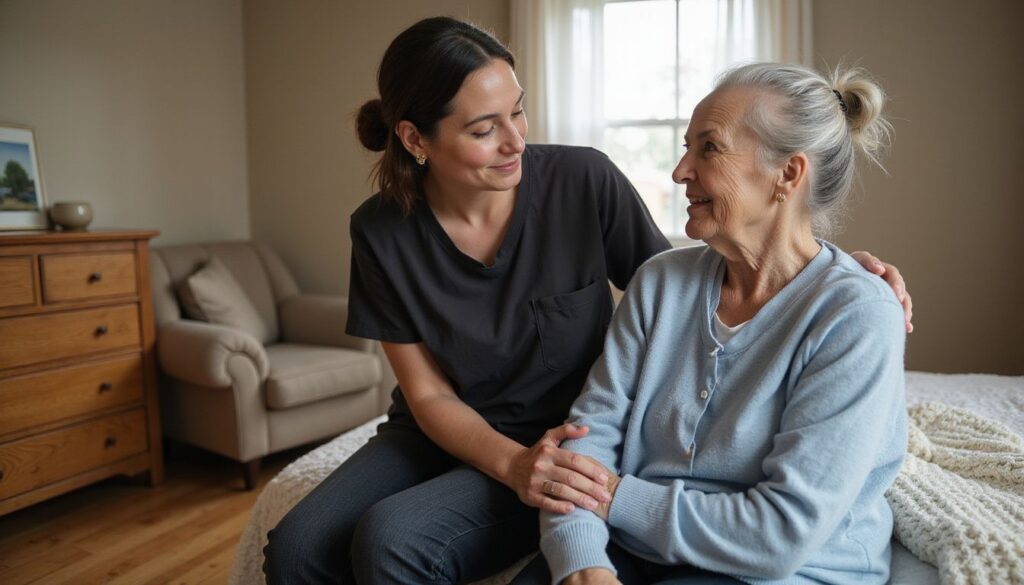
Personal care for seniors is hands-on help with everyday routines such as bathing, dressing, personal hygiene, and using the restroom. The need may begin with one difficult part of an otherwise independent day: fastening clothes, getting ready for a shower, or managing a morning routine without becoming exhausted.
Good in-home personal care does not take every task away from the person. It supplies the help that is needed while leaving room for familiar habits, preferences, and whatever the person can comfortably do. That difference matters when the assistance involves activities someone has handled privately for most of their life.
Best Quality Home Care Agency provides non-medical home support, including personal care. Families can contact our Parma Heights or Westlake office to discuss the actual tasks, the person’s needs, and availability at their address. The following sections explain how personal care for the elderly can fit into daily life while preserving choice, privacy, and the routines that matter.
What Personal Care Means at Home
Personal care is daily living assistance for the person, rather than only the home around them. Washing dishes is household support. Helping someone with washing and dressing is personal care. The two may be included in one plan, but they require different attention and should not be treated as interchangeable items on a cleaning checklist.
You may hear the term activities of daily living, or ADLs. It refers to basic self-care activities, such as bathing, dressing, eating, toileting, and moving between positions. Instrumental activities of daily living, or IADLs, include tasks that support independent living, such as shopping, preparing meals, and managing household routines.
Ohio’s definitions of personal care and nonmedical home health services cover several forms of assistance. A legal definition does not mean every agency offers every task in every circumstance. The care plan must identify the help that this person needs and that the provider can appropriately deliver.
That is why “needs personal care” is only the beginning of the conversation. Two people may both need dressing assistance but require quite different visits. One wants clothing laid out and help with buttons. Another needs substantial hands-on assistance and more time. The plan should describe the difference.
How Much Help Is Needed with a Daily Activity?
Start by noticing where a routine becomes difficult, rather than labeling the person as either independent or dependent. The goal is to identify the part that needs support.
| Type of help | What it can look like | What to clarify |
|---|---|---|
| Preparation and reminders | Putting agreed clothing or toiletries within reach and prompting the next step | Can the person complete the task after that preparation? |
| Partial assistance | Helping with a fastening or another difficult part while the person does the rest | Which steps need hands-on support, and which should remain independent? |
| More substantial assistance | Providing more of the physical help needed for the routine | Does the task require particular training, equipment, staffing, or clinical guidance? |
These are descriptive examples, not formal eligibility categories or a substitute for assessment. They help the family explain the situation accurately. A useful description might be, “She chooses her clothes and puts on her shirt but cannot manage the fastenings,” rather than simply, “She needs someone to dress her.”
Needs can also change during the day. Someone may be comfortable with a morning routine but find later tasks more tiring. Arrange help around the pattern that actually occurs, and make a separate plan for times when no caregiver is present.
Bathing and Personal Hygiene: Privacy Comes First
Assistance with bathing is often more sensitive than assistance with meals or laundry. It involves private space, personal exposure, and a loss of familiarity if another person suddenly takes over. A respectful approach begins before any physical help: what does the person prefer, what can they manage, and what part makes them uncomfortable?
Discuss the usual bathing routine, the layout of the room, and any known mobility or health-related restrictions. An available bathtub does not automatically mean the person can use it safely with one helper. Where equipment, transfers, or clinical restrictions are involved, the appropriate assessment and instructions need to be in place before the visit.
The caregiver should explain what is about to happen and obtain the person’s cooperation, rather than move abruptly from conversation into a personal task. Privacy can include closing a door, limiting unnecessary observers, and allowing the individual to do the parts they are able and willing to manage.
Time matters too. A rushed visit can make an already uncomfortable activity harder. The schedule should allow for preparation, the agreed assistance, getting dressed afterward, and leaving the space usable. Bathing is not complete simply because the washing portion is over.
If the person is distressed or the routine cannot be completed comfortably, the answer is to pause and communicate, not force the task to satisfy a checklist. New pain, a sudden change in ability, or another health concern may require clinical attention before the usual plan resumes.
Everyday Grooming and Oral Care
Personal hygiene includes the smaller routines that help someone feel like themselves: washing, brushing hair, ordinary oral care, and getting ready in their preferred way. A person’s usual appearance is part of their identity, not an optional decoration that becomes irrelevant when help is needed.
Prepare familiar products and explain any established instructions. Denture supplies, glasses, hearing devices, and grooming items should have agreed storage places. The caregiver should know which items are personal, which may be assisted with, and which must be handled by the individual or another professional.
Routine grooming should not be confused with treatment. A sore mouth, new skin problem, painful feet, or an injury needs an appropriate professional response. Do not assume that personal care includes wound treatment, specialist foot care, or other procedures because they occur during a hygiene routine.
It is also worth distinguishing a preference from a difficulty. Someone may want a different hairstyle or choose not to wear makeup. Assistance should follow their choice, not a relative’s idea of how they ought to look.
Dressing Assistance Without Taking Over the Choices
Help with dressing can begin with making clothing easy to find and reach. The person may need help selecting between a few suitable options, or they may know exactly what they want and only need help with a sleeve, fastening, or shoes.
Keep clothing choices with the older adult whenever possible. “Would you like the blue shirt or the striped one?” leaves a real choice. Preparing an outfit without asking may be efficient, but it can unnecessarily remove control from someone who is able to make that decision.
Explain what makes the task difficult when arranging care. Reaching, balance, discomfort, fine hand movements, or remembering a sequence are different issues. A caregiver needs that information rather than a vague request to “help get ready.” Any movement restrictions from a clinician should be included in the instructions.
Changes to clothing can sometimes make a routine easier, but they should be welcomed rather than imposed. A simpler fastening or more comfortable garment is useful only if the person will wear it. There is no reason to discard a familiar wardrobe because another person is now helping.
Allow the person time to complete the steps they still manage. Taking over solely because the caregiver can do something faster changes assistance into control. The plan should make room for participation without expecting someone to struggle through a task that has become uncomfortable.
Restroom Assistance and Incontinence-Related Needs
Using the restroom is another deeply private activity. A plan may involve reminders, help reaching the bathroom, assistance with clothing, or agreed hygiene support. Those tasks should be discussed directly and discreetly rather than hidden behind a general phrase such as “a little personal help.”
Explain the level of assistance needed and any existing equipment or clinical instructions. If the person requires help with transfers, that need must be assessed together with toileting, not discovered unexpectedly during a visit. Confirm what the agency can provide before assuming every aspect is included.
For incontinence-related needs, discuss the routine, supplies, disposal arrangements, and who replenishes products. The person’s preferences and privacy should remain central. Family updates should communicate relevant care information without turning a sensitive issue into casual conversation in front of others.
A caregiver can report a change they observe, but diagnosing its cause is a clinical responsibility. New discomfort, a sudden change in the person’s usual pattern, or a skin concern should reach the appropriate healthcare professional. Catheter procedures and other clinical tasks should not be assumed to fall within ordinary non-medical personal care.
Planning these details beforehand reduces awkward surprises. It also gives the family a clearer basis for discussing visit length and the assistance required when the caregiver is not there.
Mobility Assistance and Moving Through the Home
Personal care often includes movement between activities: getting to the bathroom, approaching a chair, or moving from rest into the next part of the day. The relevant question is not only whether someone walks, but what support is required and whether the home allows the planned assistance.
Describe any walking aid, existing transfer instructions, recent change in mobility, and known difficulty with particular routes or positions. Where a task needs equipment, more than one person, or specialist training, the agency must confirm an appropriate arrangement. A family should not expect a single caregiver to improvise a lift or physically manage a situation beyond their training and agreed role.
There are useful household steps that do not involve teaching a transfer technique. Keep the usual route available, place everyday belongings where the person expects them, and discuss any obstacles that interfere with the care plan. CDC guidance for caregivers includes attention to trip hazards, lighting, and suitable home safety measures.
Clearing clutter does not guarantee that a person will not fall. Changes in balance or movement can have several causes and deserve appropriate assessment. The caregiver’s observations can be shared with the family or clinician, while the clinical assessment remains separate from the non-medical service.
Meals, Eating, and Medication Routines

Food-related support can involve several different tasks. Preparing lunch, carrying a plate, opening packaging, and assisting with eating are not the same service. A person who enjoys choosing the menu may still need help using the kitchen or managing the meal once it is served.
Tell the agency what is needed at each stage. The plan can preserve familiar food preferences while following established instructions from the person’s healthcare team. A non-medical caregiver can prepare food according to an established plan; prescribing a therapeutic diet or providing clinical nutrition counseling requires an appropriately qualified professional.
If there are swallowing difficulties, special feeding requirements, or other clinical restrictions, they must be addressed with the appropriate healthcare professional. A softer meal chosen informally is not a substitute for individualized guidance. The agency must also confirm whether the resulting assistance is within its service scope.
Practical food support can still be valuable without becoming clinical care. Preparing agreed meals, making the table comfortable to use, and cleaning up afterward can remove ordinary barriers to the day’s routine. Our service overview describes the agency’s meal preparation and personal care categories.
Medication Reminders Are Not Medication Management
Remembering a scheduled dose and deciding what medication someone should take are different responsibilities. Medication reminders may fit within a non-medical care plan. Decisions about medicines, doses, interactions, or changes to a prescription belong with the appropriate healthcare professional.
Ohio rules describe certain assistance with self-administration. Any help beyond reminders should be specifically confirmed with the agency and reflected in the individual’s plan. Do not assume that a general promise of personal care includes selecting doses, filling an organizer, administering medication, or interpreting side effects.
A written routine should identify who prepares medication information and who is contacted about a missed dose, uncertainty, or a change. Our medication reminders for seniors guide explains that distinction in more detail.
Personal Care, Companionship, and Home Health Are Different
Several services can support the same person without doing the same job. Personal care focuses on hands-on daily routines. Companionship centers on company, conversation, and activities. Light housekeeping maintains the living space. Skilled home health involves clinical services such as nursing or therapy under the appropriate arrangements.
The difference affects staffing, expectations, and payment. Someone who needs help bathing should not receive a plan that assumes friendly conversation alone will meet that need. Equally, a person seeking company does not automatically need an extensive hands-on care routine.
These services can be complementary. A person receiving clinical care after a hospital stay may also need help dressing or preparing meals between clinical visits. That does not make the non-medical agency responsible for medical treatment, and it does not mean one payment arrangement covers both.
The broader non-medical home care guide explains the overall category. This page concentrates on the personal routines that require another person’s attention, discretion, and appropriately agreed assistance.
When a Daily Routine Starts Needing More Support
A family may notice a change indirectly. A parent avoids an outing because getting ready has become tiring. Clothing stays unchanged because fastenings are difficult. The person says they have already washed when the task has become uncomfortable. These observations are reasons for a conversation, not a diagnosis.
Ask what has become difficult and listen to the person’s explanation. The problem may be a physical obstacle, pain, fatigue, embarrassment, or an arrangement that no longer suits their day. A new or marked change in functioning needs medical attention as appropriate rather than being attributed to age without investigation.
For a non-urgent discussion, describe a specific task rather than making a sweeping judgment about independence. Offering help with the morning routine is more concrete than announcing that the person can no longer live alone. It also makes a limited starting arrangement easier to understand.
Keep separate notes about tasks, timing, and support already available. A relative may be able to visit at lunch but not help with dressing in the morning. That uncovered period matters even when the family is involved every day.
Introducing Personal Care When Someone Is Reluctant
Reluctance is worth understanding rather than treating as an obstacle to overcome quickly. The person may dislike an unfamiliar helper, worry about cost, or feel uncomfortable with a relative discussing private matters on their behalf. Different concerns need different responses.
Start with the person’s own priority. They may want to get ready for an outing without exhausting themselves, maintain a preferred grooming routine, or avoid asking a spouse for a difficult task. Explaining how assistance serves that goal is more respectful than presenting care as something being imposed.
Some preferences are easier to discuss privately: the caregiver’s gender, communication style, language, or how much conversation the person wants during a personal task. Make these preferences known at intake. A request can guide matching, but availability should be confirmed rather than promised.
Where memory loss affects understanding or communication, the approach may need additional planning. The National Institute on Aging’s guidance on bathing, dressing, and grooming in Alzheimer’s care emphasizes balancing independence with needed support and recognizing the embarrassment these activities can cause. Discuss the individual’s situation and the agency’s relevant capability rather than assuming every caregiver has specialist dementia training.
Repeated distress, refusal, or a change in cooperation should lead to review of the plan. It may be the timing, the person providing help, discomfort, or another concern. Record what happened in ordinary language and seek the appropriate advice; a completed checklist is not more important than the person’s wellbeing.
Preparing for a First Personal Care Visit
The first conversation should cover both needs and preferences. A list of diagnoses alone does not explain how someone gets through a morning. Describe the actual routine, the difficult steps, and the assistance already provided by relatives or professionals.
- The tasks the person wants help with and the parts they prefer to do independently.
- Relevant mobility restrictions, equipment, and existing clinical instructions.
- Usual times, product preferences, privacy needs, and communication preferences.
- Access to the home, available supplies, and any household circumstances affecting the visit.
- The family contact and the agreed process for communicating changes or concerns.
Have the ordinary supplies ready and easy to identify. Clothing, towels, toiletries, and any agreed personal products should be where the caregiver and client expect to find them. Avoid unnecessary rearrangement just before care starts; a newly organized room may be harder for the person to navigate than the familiar one.
Share only the information needed for the care task through the agency’s approved process. A caregiver may need an emergency contact and relevant instructions, but that does not mean every visiting helper needs access to financial records or unrelated personal documents.
Agree how the visit ends. The client should know what has been done, what remains, and when the next expected help occurs. Supplies and belongings should be left in their agreed places. These closing details make the routine coherent rather than a series of tasks completed by someone passing through.
Choosing a Caregiver and Setting Clear Expectations
A good fit involves both appropriate skills and a workable relationship. Ask the agency how it assesses the tasks, assigns caregivers, and responds when the arrangement needs to change. A friendly introduction is useful, but it cannot replace confirmation that the caregiver can carry out the agreed assistance.
Questions about training should relate to the person’s actual needs. Someone needing assistance with mobility requires a different discussion from someone needing a little help with grooming. Avoid relying on a general label such as “certified” without understanding what qualification is meant and how it relates to the task.
Discuss communication and continuity as practical matters. Who handles a schedule change? How does a substitute learn the routine? Who should the family call with a concern? Do not assume the same caregiver is guaranteed for every visit unless the agency has explicitly committed to that arrangement.
Licensing also needs a precise meaning. The agency’s regulatory status and an individual worker’s qualifications are different questions. Ask for the relevant information rather than expecting every non-medical caregiver to hold the same professional license as a nurse or therapist.
If a particular task is outside the agency’s scope, it needs a separate plan. Clear limits are more useful than an expansive promise that a caregiver will handle anything the family needs.
Scheduling Help Around Real Life
Personal care often has a time-sensitive place in the day. Dressing assistance after someone has already missed an outing does not solve the original problem. Build the discussion around when the help matters, then confirm what the agency can actually schedule.
A hypothetical morning visit might include the agreed hygiene routine, dressing assistance, and preparation for breakfast. Another person may need a longer visit on selected days for bathing and a different arrangement for ordinary daily tasks. The available visit lengths and times need to match the individual plan.
Allow time for the whole activity. Preparing supplies, giving the person time to participate, completing the assistance, and communicating an issue all count. A plan that only budgets for the fastest possible physical action can leave both the client and caregiver under unnecessary pressure.
Discuss what happens between visits and when the planned caregiver is unavailable. Do not treat an ordinary home care arrangement as continuous supervision or an emergency response service. Agree the available schedule with the agency and identify who will cover any needs outside those visits.
Family Involvement Without Conflicting Instructions
Family support and professional care work best when responsibilities are visible. One relative may buy supplies, another may manage appointments, and the caregiver may provide the agreed personal assistance. Without a simple division of work, necessary tasks can be duplicated while another task is missed.
Choose an appropriate contact for routine communication, while keeping the older adult involved and respecting their consent and any applicable decision-making authority. Different relatives should not quietly give a caregiver conflicting instructions about medications, mobility, or personal routines.
Useful updates describe what happened. “Needed more help with the usual clothing fastenings today” conveys something more actionable than “not doing well.” Record relevant changes without interpreting them as a diagnosis. The family and appropriate professionals can then decide what requires further attention.
Personal care can also change a relationship for the better when a spouse or adult child no longer has to provide every intimate task. It can leave relatives more time for companionship and the parts of the routine they want to share. Some families prefer to continue parts of the routine themselves, and the plan should reflect that choice.
For wider resources, including caregiver support and public programs, our guide to elderly help in Ohio provides separate routes. Those programs should complement the agreed care plan rather than be assumed to fund it automatically.
The Cost of Personal Care for Seniors
The relevant cost is the cost of meeting the person’s needs, not simply the lowest hourly figure. Visit length, frequency, the assistance required, and other agreed conditions affect the total. A quote should identify what is included and how changes are handled.
For an hourly arrangement, begin with scheduled hours multiplied by the quoted rate. Four visits of two hours would represent eight hours in a week before any separate charges. This is a planning example; use the hours and rate in your actual quote. Ask whether minimum visit lengths, cancellations, travel, or particular days affect the proposed quote.
Also consider supplies and any separately arranged services. A home care quote is not necessarily a quote for accessibility equipment, transportation, clinical care, or household products. Separating those expenses makes a family budget more realistic.
Paying privately and using a benefit involve different processes. Medicare does not cover personal care when it is the only care needed. Other policies and programs have their own requirements. Obtain an explanation of the actual coverage and provider arrangement rather than relying on a broad statement that an agency “accepts insurance.”
Ohio’s PASSPORT program is a possible source of support for eligible older adults, following its assessment and authorization process. Confirm program eligibility and the provider arrangement before expecting PASSPORT to pay for a particular visit.
Discuss the service plan and payment questions before starting. A useful consultation should leave the family understanding the tasks, the schedule being considered, and the conditions of the quote, even when some funding questions still need to be resolved with another organization.
Household Support, Technology, and Community Services
Personal care is easier to organize when the surroundings support the routine. Fresh clothing, available towels, and a usable bathroom matter, but they are household tasks with their own time requirements. Light housekeeping for seniors can be discussed alongside personal care, with time set aside for the household tasks included in the plan.
Companionship addresses another part of the day: conversation, shared interests, and social connection. Someone can need help dressing and still want to choose their own activities and company. The practical plan should allow for both needs instead of reducing the person to a set of care tasks.
Reminders and Remote Technology Have a Supporting Role
A calendar, reminder device, or family communication tool may help organize a routine. It does not physically help someone put on clothing or make an unsuitable transfer safe. Choose technology for the problem it actually solves, with the person’s understanding and preferences in mind.
Telehealth appointments and clinical remote monitoring belong to the relevant healthcare arrangements, not automatically to a non-medical agency’s service. Families using such tools should establish who receives information, who responds to an alert, and what happens if the device is not used. The existence of an app is not an agreement that a caregiver or clinician is continuously monitoring it.
Community services may supply another part of support, such as meals, an activity, or transportation. Confirm their schedules and eligibility directly. An outing can be more achievable when personal care is arranged beforehand, but the ride and the assistance at home remain separate tasks to coordinate.
Review the Plan When Needs Change
Once visits begin, review whether the original description still matches daily life. Is the person comfortable with the routine? Is enough time allowed? Are agreed tasks being completed? Is the family still covering an important gap that was overlooked?
Change the plan for a reason rather than increasing services automatically. A new difficulty may require a different timing, different supplies, a revised task list, or a clinical assessment. More hours alone will not necessarily address a task that falls outside the caregiver’s scope.
After a hospital stay or a meaningful change in mobility, share the current instructions with the agency before assuming the previous arrangement can resume unchanged. Keep the responsibilities of clinicians, family, and the non-medical caregiver clear.
The measure of a useful personal care plan is whether it supports the person’s actual routines with appropriate help and respect. Maintaining independence can include accepting assistance with a difficult step while retaining choices about everything around it.
Discuss Personal Care in Parma Heights or Westlake
Best Quality Home Care Agency provides non-medical personal care, including bathing, restroom assistance, hygiene, and dressing. Start with the activity that has become difficult and the help already available. The agency can then discuss the relevant tasks and availability at the client’s address.
Call (440) 373-7192 or request a free consultation. Bring the person’s priorities into that conversation. The result should be an arrangement they can live with, not merely a list of services that sounds comprehensive.
Questions About In-Home Personal Care for Seniors
What does personal care for seniors include?
Personal care can include assistance with bathing, dressing, personal hygiene, using the restroom, and other daily activities. The exact tasks and level of hands-on help must be assessed and agreed with the agency for the individual.
Can someone receive help with only part of a routine?
Yes, a care plan can identify the specific steps that need assistance while preserving the parts the person can manage. For example, someone may choose and put on clothing but need help with fastenings. Confirm the tasks and scheduling with the agency.
Is personal care the same as nursing care?
No. Non-medical personal care supports daily routines. Skilled nursing and therapy involve clinical services under the appropriate professional arrangements. A person may need both, but their responsibilities and payment conditions are different.
What if my parent is uncomfortable accepting personal care?
Discuss the specific concern, preferred routine, privacy needs, and preferences about the helper. Start with the assistance the person understands and accepts. Distress, refusal, or a change in ability should lead to review, not pressure to finish a task.
Does Medicare pay for personal care at home?
Medicare does not pay for personal or custodial care when it is the only care needed. Covered home health services have separate eligibility conditions. Other benefits and policies should be checked for the individual’s situation.
How do we arrange personal care with Best Quality Home Care Agency?
Call (440) 373-7192 or use the contact page to request a free consultation. Describe the daily tasks, current help, preferred schedule, and address. The agency will need to confirm a suitable scope and availability before care is arranged.
